Published · Huiqiao Industrial
In this guide
- Different names do not create one global grade ladder
- Why the test method and sample matter
- A procurement checklist for test documents
- Turn the requirement into an order specification
- Buyer checklist
Different names do not create one global grade ladder
Understand the reference behind the label
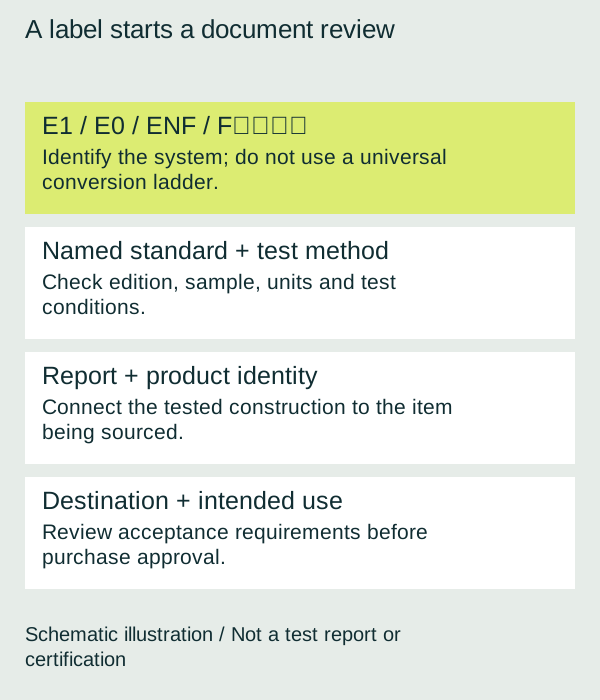
E1, E0, ENF and F☆☆☆☆ appear in different specification systems. A familiar symbol does not establish identical limits, test conditions, product scope or acceptance in another market. Do not arrange all four labels into a single universal ranking.
E1, E0 and ENF
China’s GB/T 39600-2021 classifies formaldehyde emission from wood-based panels and their products using E1, E0 and ENF. When one of these grades is offered, ask for the named standard and applicable edition in the report. The Chinese grade label alone does not prove suitability for a European or US purchase. Source: SAMR: GB/T 39600-2021 classification context.
F☆☆☆☆ in the Japanese regulatory context
The four-star notation is associated with Japan’s formaldehyde classification framework for relevant building materials. Its use has a specific regulatory and product context. Confirm the underlying JIS, JAS or other applicable approval route and whether the documents cover the item you are sourcing. Source: Japan MLIT: formaldehyde controls for building materials.
The destination still matters
A European specification using E1 needs its own named standard, product scope and test method. EN 13986 is cited only as an example of a construction-related wood-based panel reference. EN 13986 alone does not define a universal furniture-panel formaldehyde requirement across Europe. Source: BSI: EN 13986 scope for wood-based construction panels.
US-bound procurement
For regulated composite wood products entering the United States, review the applicable TSCA Title VI requirements and relevant product certification and labeling. TSCA Title VI applies to regulated composite wood products including hardwood plywood, MDF and particleboard, with certification, labeling and recordkeeping requirements where applicable. E0, ENF or a four-star label is not a substitute for that review. Source: US EPA: formaldehyde standards for composite wood products.
Why the test method and sample matter
Numbers need context
A reported concentration or emission rate is meaningful only with its units, test method, conditioning and sampling information. Results from different methods cannot be converted by simply changing the grade name. Ask a qualified laboratory or your project compliance adviser to resolve comparisons that affect acceptance.
Core board and finished component are different samples
A raw MDF or chipboard report identifies that tested material. A decorative panel adds facings and adhesives; a cabinet component may add edging, machining and other materials. Ask which product was tested, how it was prepared and which parts of your purchase are covered. Do not assume a core-board result automatically certifies every finished cabinet.
A report is not a batch inspection record
A laboratory report and an order inspection serve different purposes. Establish how the report’s product model, material construction and supplier relate to the goods you will receive, and agree any sampling or traceability requirements for your order.
A procurement checklist for test documents
Check the complete document
Request the report rather than a cropped badge or sales screenshot. Review the document identity, date, sample description, result, stated conclusion and any limitations. Verify questionable reports with the issuing organisation.
Turn the requirement into an order specification
Write the purchasing requirement before quoting
Identify destination, application, board or component construction and the required test or compliance documentation. For a mixed BOM, specify which materials and components need coverage. Have the applicable acceptance criteria reviewed before order approval.
Connect compliance with product selection
Use the same material schedule when discussing melamine faced MDF, chipboard or PET decorative panels. Record the core, facing, adhesive-related requirements and report references beside the approved sample. A supplier’s general statement about “low formaldehyde” should not replace this record.
Keep performance questions separate
An emission classification does not establish scratch resistance, moisture resistance, bond durability or shipment performance. Review those requirements independently. Huiqiao does not claim that every offered board holds a particular grade or certification.
Buyer checklist
- Testing standard and applicable edition
- Test method, units and sample-conditioning information
- Report issuer and relevant accreditation or approval scope
- Exact product model and construction; connection to the order or batch
- Applicable market and intended use
- Required certification, labeling and traceability documents where applicable
Reference sources
References reviewed for this guide on 11 October 2026. Confirm the applicable edition and requirements for your product and destination when purchasing.
- SAMR: GB/T 39600-2021 classification context — official standard reference; confirm the applicable edition when purchasing.
- Japan MLIT: formaldehyde controls for building materials
- BSI: EN 13986 scope for wood-based construction panels
- US EPA: formaldehyde standards for composite wood products
Discuss your sourcing requirements
Need help reviewing panel specifications or test documents for a project? Send your material requirements to info@huiqiao-industry.com.